Bobby Shandy
The Life and Opinions of Tristram Shandy, GentlemanBobby Shandy, the elder son of Walter Shandy and brother of Tristram Shandy, is presented through the meanings his father assigns to his birth and character, and through the consequences of his death. Walter takes Bobby’s being born head-first and his later slowness as confirmation of a speculative theory about birth and the mind; when Bobby dies, the loss displaces Walter’s other fixations and makes Tristram the heir.
Identity and Background
Bobby is Walter’s first child and Tristram’s older brother. The account gives little independent description of his personality or experience: he enters the narrative chiefly as the object of his father’s interpretation, and then as the absent family member whose death alters the household’s future.
His circumstances at birth are important to Walter. Bobby was born while Walter was at Epsom, and he came into the world head-first. Walter combines those facts with Bobby’s later reputation as a boy of remarkably slow parts, making his elder son an apparent example in an argument about the effects of birth on intellectual faculties.
Walter’s Hypothesis and Bobby’s Birth
Walter’s theory contrasts a head-first birth with delivery by Caesarean section. In his account, Caesarean delivery avoids pressure on the head and brain as the child passes through the pelvis; he points to celebrated figures said to have been born by that method as evidence that the difference might matter. His conjecture is not presented as established medicine, but as a hypothesis into which he arranges both historical examples and family experience.
Bobby becomes the household evidence that seems to confirm the theory. Walter treats the conjunction of his son’s Epsom birth, firstborn status, head-first presentation, and slow development as a pattern with explanatory force. The narrative emphasizes the act of interpretation: Walter spells the circumstances together into his opinion, turning the particular history of a child into support for a general claim.
That theory had already shaped Walter’s thinking about Tristram’s birth. He had considered whether a Caesarean delivery might avoid the pressure he feared, but the idea alarmed Elizabeth Mollineux, and he did not pursue it. After Bobby’s birth and slow development appear to vindicate the theory, Walter resolves to try a different course with the next child. The evidence makes Bobby’s place in the family consequential before his death: his birth helps determine how his father approaches the birth of Tristram.
Death and the Heirship Reversal
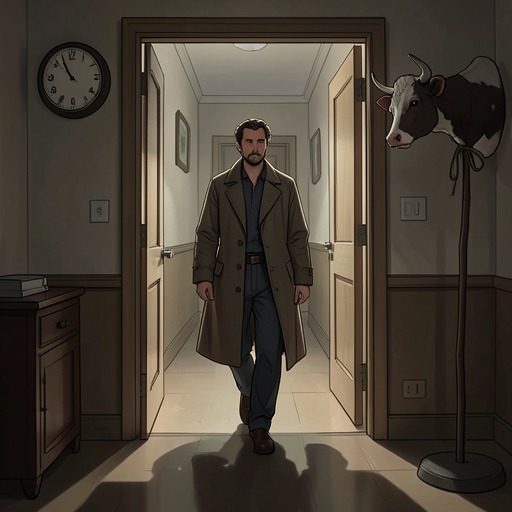
Bobby’s death is disclosed in a letter received while Walter is absorbed in calculating the expense of a journey by riding post from Calais through Paris to Lyons. The interruption arrives amid mundane household difficulties. Obadiah opens the door to report that the family has run out of yeast and asks to borrow a horse; the great coach-horse needs a shoe, the Scotch horse cannot bear a saddle, and Patriot has already been sold. Walter continues his calculations through these interruptions, so the news of Bobby’s death initially meets a mind still occupied with routes, costs, and practical arrangements.
The letter is read aloud by Uncle Toby, who finally tells Walter that his nephew is dead. Walter’s first response is incredulity: he asks whether Bobby has gone without leave, money, or a governor, taking the news at first as if his son had simply departed. Uncle Toby clarifies that Bobby is dead, not absent, and says he has no reason to think the boy had been ill—except that he must have been ill enough to die. His low voice and deep sigh mark the change from travel calculation to bereavement.
The narrator also records the striking physical contrast in Walter’s response. When he hears the news, he fixes his compasses more firmly on Nevers rather than abandoning the calculation. The comparison with Agrippina, who abruptly stopped working upon hearing of her son’s death, underscores how differently Walter’s mind handles the interruption: grief is registered, but the narrative shows it alongside the stubborn continuation of his practical task.
Consequences and Narrative Significance
Bobby’s death changes the succession: Tristram becomes the family heir. That consequence gives Bobby’s absence a continuing effect on the younger brother’s position, even though Bobby himself is not developed through an extended account of his life. His death also breaks the hold of Walter’s previous preoccupations. Walter is said to have been close to sinking under the strain of being pulled between two equally forceful projects, just as he had suffered over Tristram’s Christian name; Bobby’s death rescues him from that impasse by replacing one trouble with a new and more grievous one.
The episode’s movement from speculation to bereavement sharpens the novel’s pattern of unstable attention. Bobby first appears within his father’s effort to reason from bodily circumstances to character; later, his death interrupts a journey calculated on paper, while domestic interruptions crowd around the announcement. The boy’s place in the narrative thus rests on a double consequence: his life is made to serve Walter’s theory, and his death reorganizes the family and Walter’s thoughts. The shift from one vexation to another does not erase the loss; it shows how the novel makes family history advance through reversals that Walter can neither plan nor master.